

What Lab-Grown Actually Means for Gemstones
by sensitive stones on Apr 04, 2025
Walk through any jewelry site in 2026 and you will meet the phrase everywhere. Lab-grown. Lab-created. Grown, not mined. It is printed on tags, repeated in product copy, and very often presented as the responsible choice.
It is a useful term. It is also doing more work in marketing than it can carry. This guide explains what lab-grown genuinely means for a gemstone. It covers what the term tells you, and what it does not.
In this article
- What "lab-grown" actually means
- How a moissanite crystal is grown
- What lab-grown tells you, and what it does not
- Moissanite, lab diamond and mined diamond
- How to read a gemstone label
- What we say, and what we will not
- Frequently asked questions
- Where to start
What "lab-grown" actually means
A lab-grown gemstone is a real gemstone. It has the same chemistry and the same crystal structure as the material found in the ground. The difference is where the crystal formed, not what it is.
That distinction matters, because a lab-grown stone is not an imitation. Cubic zirconia imitates the look of a diamond using a different material. A lab-grown diamond is a diamond. A lab-grown sapphire is a sapphire.
Moissanite sits slightly apart, and the difference is worth knowing. It is silicon carbide rather than carbon, so it is its own gemstone and not a lab version of a diamond. We cover that in detail in moissanite vs diamond.
How a moissanite crystal is grown
Natural moissanite exists, but barely. Henri Moissan identified it in 1893 in fragments from a meteorite crater in Arizona. It is far too rare to cut for jewelry.
So every moissanite you can buy is grown. Silicon and carbon are combined and held above 2,000°C until a crystal forms. The process runs for days. The resulting crystal is then cut and polished like any other gemstone.
Lab diamonds are grown differently again, either under high pressure and heat, or by building carbon up from a gas. Lab sapphires and rubies use their own methods. Lab-grown is a category, not a single process.
What lab-grown tells you, and what it does not
Here is the honest part, and it is the reason this guide exists.
It tells you where the crystal formed. The stone was grown in a controlled setting rather than extracted from the ground. That is a verifiable fact, and it is the whole of what the term guarantees.
It does not tell you the environmental cost. Growing silicon carbide takes sustained heat above 2,000°C over several days. That is a lot of energy, and how clean it is depends on the grid behind it. Lab-grown is not automatically low impact.
It does not cover the rest of the journey. Cutting, polishing, setting, packaging and freight all sit outside the word. A stone can be grown in a lab and still travel a long way to reach you.
It says nothing about quality. Lab-grown stones vary in colour, clarity and cut exactly as mined ones do. The term is not a grade.
So when lab-grown is presented as a complete answer, treat it as one fact among several rather than a verdict.
Moissanite, lab diamond and mined diamond
All three are real stones. Two of them are diamonds. Here is how they differ on measures you can check.
| Moissanite | Lab diamond | Mined diamond | |
|---|---|---|---|
| Is it a diamond? | No, a lab-grown gemstone | Yes, grown in a lab | Yes, mined from the earth |
| Made of | Silicon carbide | Carbon | Carbon |
| Fire (dispersion) | 0.104 | 0.044 | 0.044 |
| Hardness (Mohs) | 9.25 | 10 | 10 |
| Refractive index | 2.65–2.69 | 2.42 | 2.42 |
That dispersion figure is why moissanite throws coloured flashes where a diamond returns white light. It is a measurable property of the material, not a matter of taste.
How to read a gemstone label
Four questions will tell you most of what you need to know about any stone.
What is it made of? Silicon carbide, carbon and corundum are different materials with different properties. The name of the stone should tell you which one you are buying.
Grown or mined? A clear answer either way is a good sign. Vagueness is not.
Is the claim specific? "Grown in a lab" can be checked. "Responsibly made" cannot. Specific claims are the ones a seller is willing to stand behind.
What is the setting? The stone is only half the piece. Nickel in a cheap setting is the usual cause of a reaction, whatever the gem. Ours are set in 925 sterling silver and 14K gold filled, nickel-free and lead-free.
What we say, and what we will not
We sell lab-grown moissanite. We will tell you it is grown rather than mined, because that is a fact we can show you.
We will not tell you it is sustainable. We do not control the energy that grew the crystal, and we do not audit every step between the furnace and your door. Claiming otherwise would be easy, and it would not be honest.
What we do stand behind is the stone. Moissanite does not cloud, fade or lose its fire, and our Lifetime Sparkle Guarantee covers that for as long as you own the piece.
Frequently asked questions
Are lab-grown gemstones real?
Yes. A lab-grown stone has the same chemistry and crystal structure as its mined counterpart. It is a real gemstone, formed in a controlled setting instead of the ground.
Is lab-grown the same as fake?
No. A fake, or simulant, imitates another stone using a different material. Cubic zirconia is a simulant. A lab-grown stone is the genuine material.
Is moissanite a lab-grown diamond?
No. Moissanite is silicon carbide and a diamond is carbon. Moissanite is its own gemstone, and we never sell it as a diamond.
Is lab-grown better for the environment?
Not automatically. Growing a crystal uses sustained high heat, and the impact depends on the energy behind it. Lab-grown describes where a stone formed, not its footprint.
Does lab-grown mean lower quality?
No. Lab-grown stones are graded on colour, clarity and cut like any other. The term says nothing about quality on its own.
Where to start
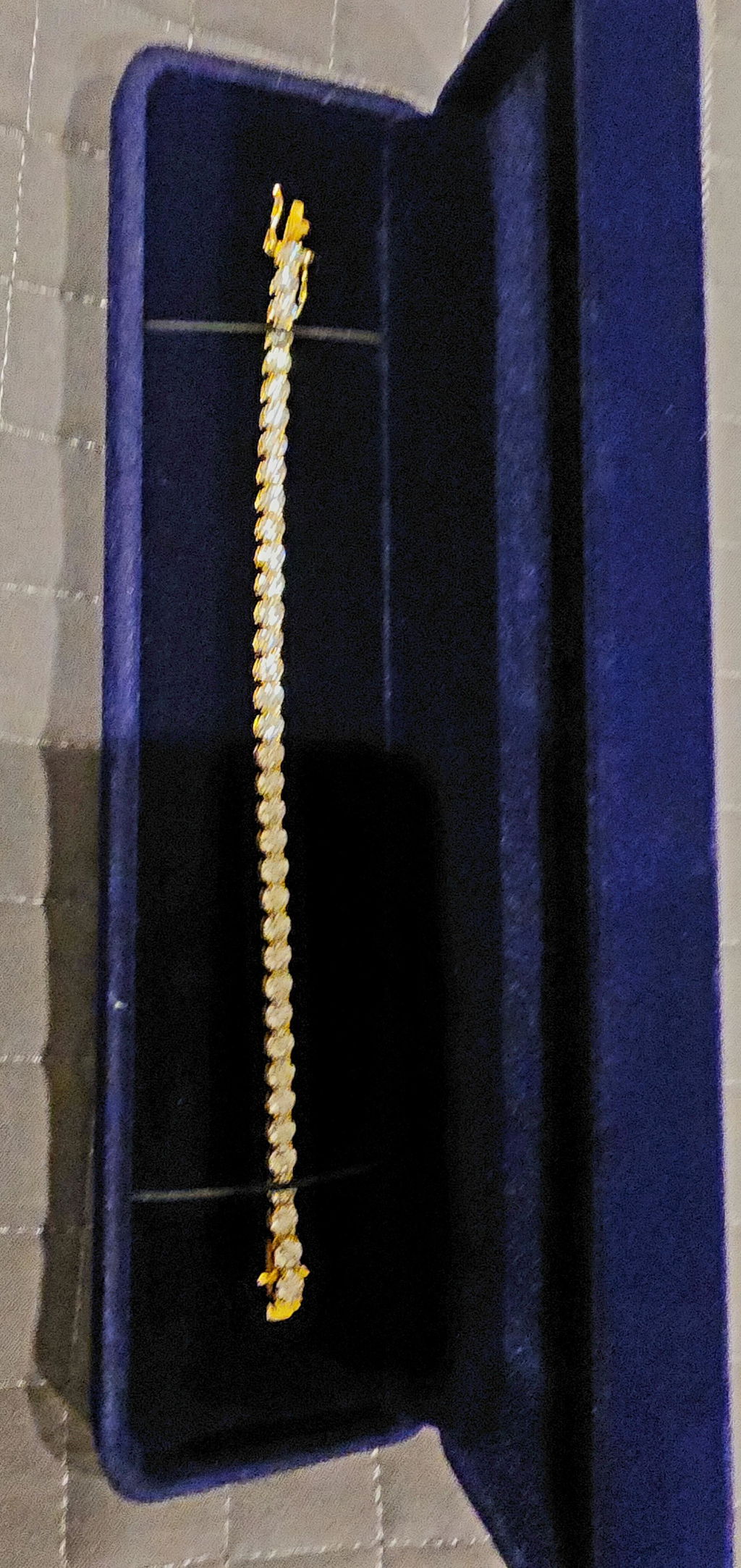
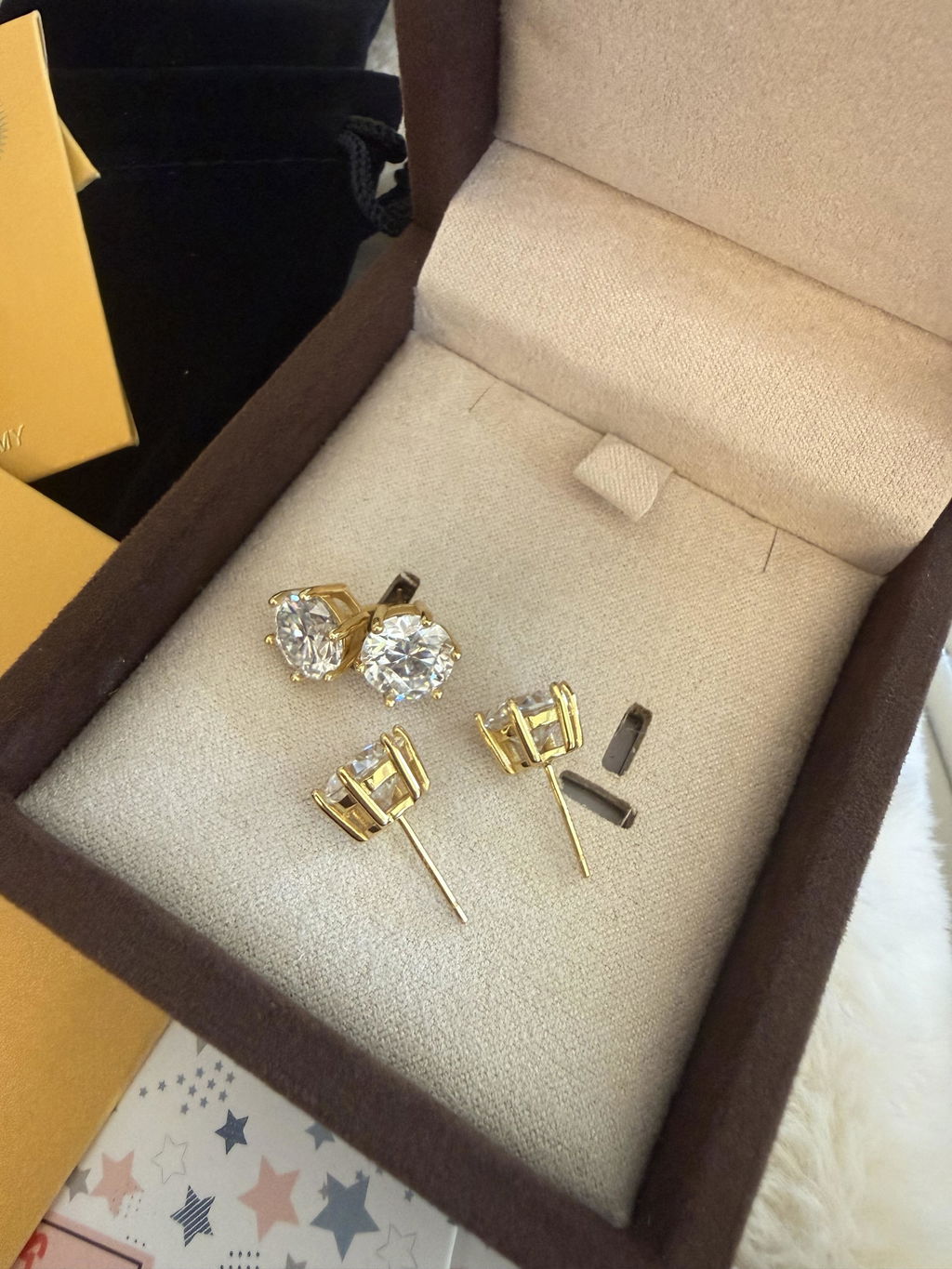
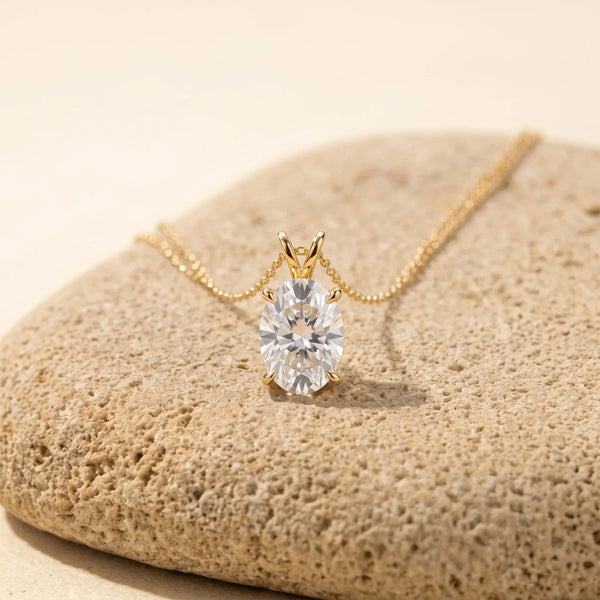
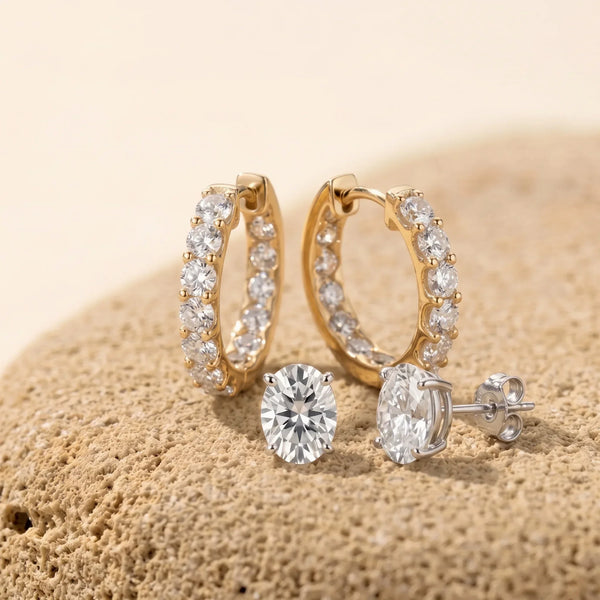
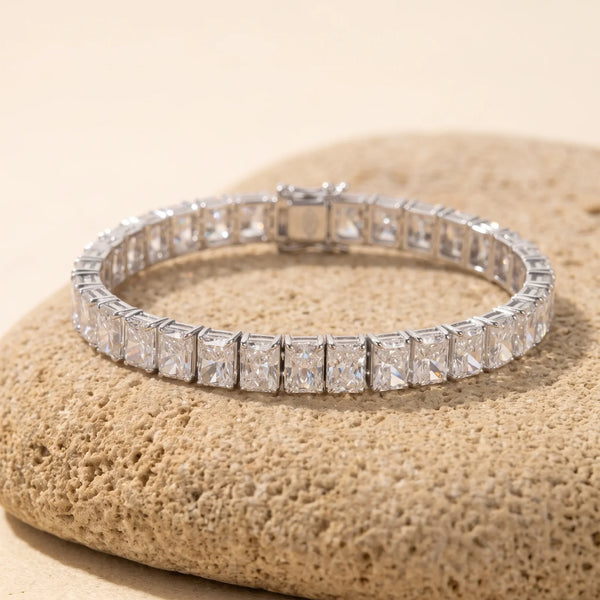
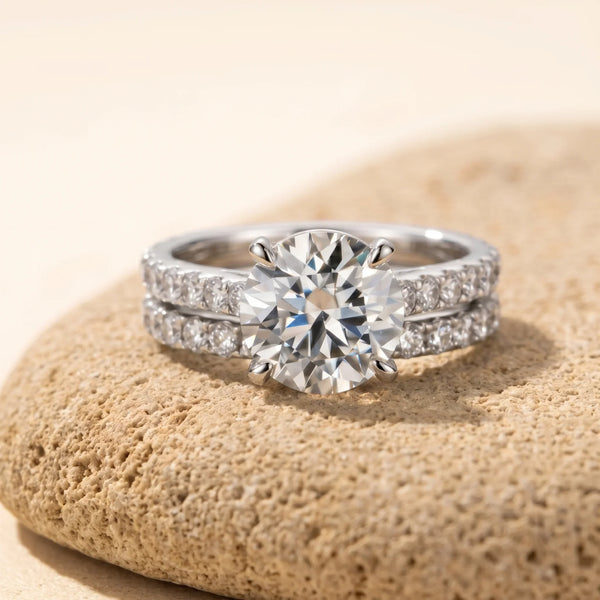
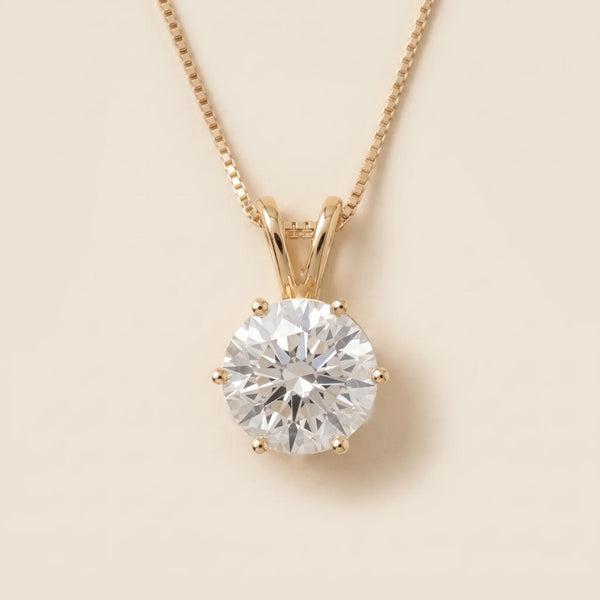
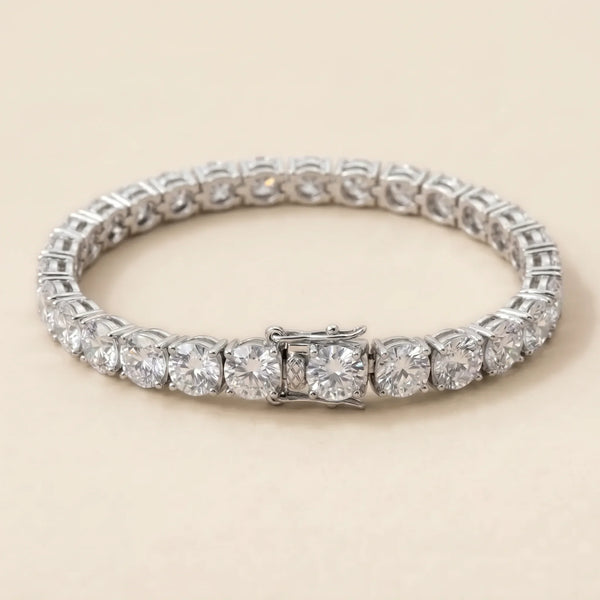
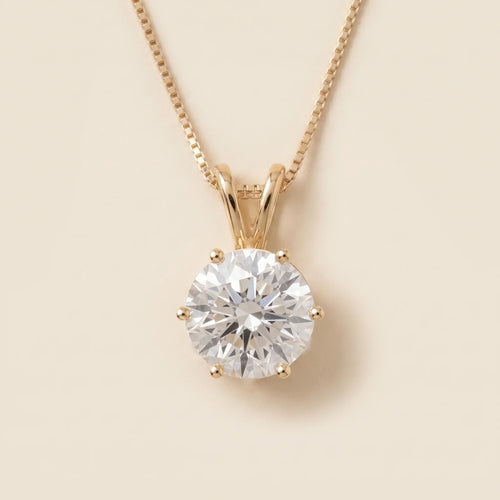
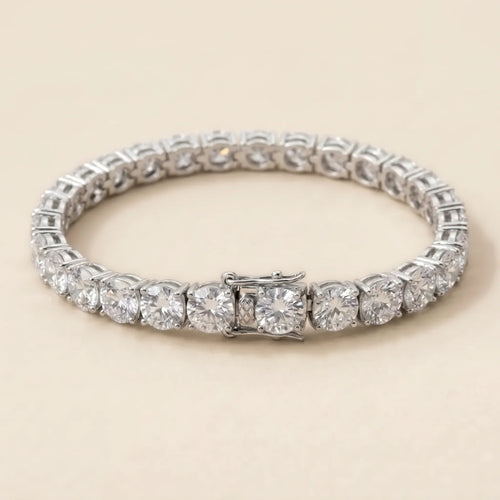
If you want the look of a solitaire without the diamond price, start with Solitaire Designs. For a continuous line of stones, look at Tennis Designs. And if you are buying for sensitive ears, the earrings are all set in hypoallergenic metal.